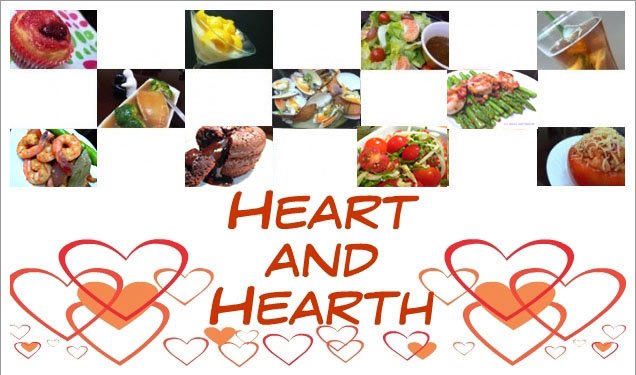
The title should be : What do you think about my new header, again?
Last year, my daughter made a header for me. If you remember it was made from pink and green motif. Quite girly, but what do you expect from an 11-year-old? I am quite proud that she can even make something like that, so this site proudly wore that banner until today...
Today, my daughter presented me with a new header. Wow! Isn't this a great Mother's Day gift?
When I was 12, I did not know anything about computers. (But then, up to now, I do not know much about computers, either... ha ha ha!) Hey! I am not that old. It was just that, I do not think computers were common in ordinary homes at that time. I was out, playing hopscotch or Chinese garter on the streets. I was also a junior girl scout in school. We were not allowed to direct traffic and help other kids cross the street like what kids in more modern countries do. But I remember we were supposed to watch and guard over the playground - to keep kids safe, to keep them from fighting and to report any injuries. I do not remember if I did my job well or not, the memories are fuzzy as the movements on the playground... but I did receive a medal at the end of the year... so maybe I did do something good :)
Nowadays, kids are not allowed to play on the streets anymore. For safety and health reasons. And the kids' school removed their playground equipments because of the number of injuries and fighting (are kids more violent these days? or the parents more prone to complain?) There are no physical education subject up to grade 3! And so, what is a mom to do? I enrolled them in sports classes like swimming to keep their bodies fit.
But swimming does not occupy a whole lot of time, so the children became computer literate early. By the way, television viewing as well as computer time for kids is limited in this household. :) And we say no to violent computer games :)
I admit my kids are more computer literate than I am. My 12-year-old designed this new header. This site will be proudly wearing this banner until the time, when she makes a new banner again or maybe when my 8-year-old will be able to make his own design as well. I thank God for my kids. Soli Deo Gloria!!!
Showing posts with label Miscellanaeus. Show all posts
Showing posts with label Miscellanaeus. Show all posts
Monday, May 11, 2009

Monday, March 30, 2009
Earth Hour 2009 : Make it A Regular Habit and Some Tips for Cheapskates Like ME

Earth Hour 2009 was last Saturday, March 28. This global event organized by WWF or the World Wide Fund for Nature requests all people of the earth - whether households or businesses or governments - to turn off their lights and non-essential household appliances for one hour. One hour means a lot. This is your personal vote and statement that you want to actively participate in, and do something about climate change.
I am happy to report that the Philippines topped the Earth Hour participation as 647 cities and towns or over 15 million Filipinos were estimated to have joined in the hour-long lights-off at 8:30 - 9:30 PM local time. This was followed by Greece with 484 cities and towns participating, and Australia with 309. (source: Inquirer.net)
This report is not surprising. Philippines, being in a tropical country, is one of the most affected by climate change. For the past several years now, we have noticed drastic changes in our weather. Either it is too wet and our streets become flooded, or too hot and dry, that our lands become parched. These conditions are not the same conditions during my childhood. Fishing and harvests have been affected the most, of course.
The Earth Hour event will be held annually on the last Saturday of March. But I think all of us should make Earth Hour a regular habit. Make this everyday instead of just annually. Turn off the lights when you leave a room. Turn off all non-essential electricity-consuming appliances when not in use. This simple act will not only save the earth, but also your wallet.
Since this is a food blog, let me list down some things we can do in our kitchens, to help save the earth, save energy and save some money as well:
1. Eat at home, with meals that you cook yourself. It is cheaper than eating out. You save gas and money. Most of all, home-cooked meals are more hygienic, more nutritious and delicious! If you say you do not have time, there are so many dishes that can be prepared in just 15 to 30 minutes. Check out this blog and many other delicious food blogs in the net for recipes.
2. Eat real food. When you go to the market or to the grocery, Check out the fresh produce, not the canned or pre-packaged 'manufactured' foods. Recent health studies have shown that processed meats, and processed food, which are loaded with preservatives, are not exactly good for us.
3. Eat the produce of the season. They are fresher and cheaper. And while you're at it,
4. Bring your own shopping "bag." When I was young, my lola (grandmother) would always bring a bayong (bag made from buri mat) to the market. Nowadays, we use disposable plastic bags that pollute our lands! Eco-friendly shopping bags are slowly becoming fashionable now, so go out, buy one and use it!
5. Have your own backyard garden, as much as possible. I do not have space in my house for a real garden, but I have lined up our small balcony with pots of herbs and plants. Of course I have killed several plants in the process (due to my inexperience and not-so-green thumb) but I persist. Why? because I know that these plants will add the much needed fresh oxygen to my home, plus, I can use my small harvest for my cooking!
6. Choose products with minimal packaging. Don't you just hate it when you have to peel off several layers of plastic or cardboard or styrofoam just to get your product? Plus it is a waste of resources! With food, we can buy in bulk to save on packaging. It is cheaper as well. Just separate into portions before freezing and thaw when needeed.
7. Recycle, recycle and recycle. There will always be new uses for everything. For example, the plastic grocery bag can be reused as a trash bag. The empty milk can can be reused as a flower pot. You would have less trash plus you will be saving money as well. Be creative! The internet has lots of available tips if you have time to browse. And of course, eat your left-overs, or transform your left-overs into a new dish!
8. Save water. Turn off the faucet when brushing your teeth. Turn off the water when you are soaping. You waste less and you will also have less water bill.
Actually, there are a lot more things you can do to save energy, save the resources of our earth. You have to do your part. This is the only planet - the only home we have.
Friday, March 6, 2009
Where's the Milk?

I know in many countries, children often drink fresh milk. Here in Manila, farms are not accessible. Fresh milk is not always available. We often give our children powdered milk.
For several years now, I give my children this brand of powdered milk. It is very expensive. But I thought if it has complete vitamins and minerals, it would be worth it. The milk is advertised as a complete food. It can be used for intravenous feeding. Accordingly, 3 glasses of milk a day would be enough to meet all the daily requirements of protein, carbohydrates, minerals and vitamins. Sounds good, doesn't it?
Lately, the milk can had changed its packaging. This was when I paid more attention to the label. Imagine my shock and indignation when the ingredients listed as such:
hydrolyzed corn starch
sucrose
high oleic sunflower oil
sodium caseinate
soy oil
medium-chain triglycerides (MCT) oil
minerals and vitamins (long list)
I did not list down the names of the vitamins and minerals. Ok, let us assume the vitamins and minerals are complete. But for me, this part is irrelevant because these can be supplied by any brand of children's multi-vitamins.
My question is where is the milk? The main ingredients are cornstarch and sucrose!!!
Have you checked your children's milk lately?
Tuesday, January 6, 2009
Happy New Year! and my 200th Post - Strawberries in December

Happy New Year everyone!
This is such a happy coincidence!
My first post for the year and my 200th post! Wow! When I started this blog, I never thought I would reach this far. Thank you to all my friends, fellow food bloggers, and readers who make blogging very worthwhile! Thank you very much for your encouragements, inspirations and support. :) From the bottom of my heart.
Actually, I have come home for the New Year, but since my little family was not around during Christmas, we had to spend a lot of time with our extended families (aka grandparents) and friends. Plus, the catching-up work and things that I had to do... so I am able to return to the food blogging world only today. And I still have a lot of blog-reading to do! So, please forgive me if I have not visited your site yet. :)
Ooohh! I have lots of plans this year! More dishes and recipes to post! First up tomorrow is the Fruit Cake Bar that I made before we took our vacation. Watch out for that. :)
Then, I am also going to share some foodie experience we had on our vacation. I am not yet telling where we went. You have to stay tuned. :)
I am also looking forward to participating in the Cookbook that the BloggerAid community will be publishing. The proceeds from the sale of the cookbook will directly go to the World Food Programme of the United Nations! Now, isn't this a worthwhile cause to join in? Please do check out BloggerAid.
And now, for the strawberries... aren't these lovely?

Sorry, I did not remove the (2) dried leaves. I just wanted to show you how they looked when I received them. These lovely, fresh, and sweet strawberries were gifts from my friend and co-worker at Couples@Work Fellowship, J. Her family spent a few days in Baguio City (a city built on a plateau north of Manila, 7 hours away by car) and brought and shared these delicious treats with us.
Maybe you are wondering what's so special about these strawberries. You see, Philippines is a tropical country. We don't really have strawberries here, except in Baguio City (where everybody goes during summer). There at the mountain top, the weather is cooler, and more conducive to growing vegetables, flowers, and strawberries, of course!
Since we were kids, I remember we would only have fresh strawberries once a year, usually during summer (that's April or May), when somebody we know would go up to Baguio. But this time, we had strawberries in December! I didn't even know Baguio grows strawberries during December. (It is the coldest time of the year.) I thought strawberries are annual plants? But then, maybe modern plant productions have discovered how to grow them even when out of season.
Strawberries are good fruits. They are full of vitamin C and like all berries, contain flavonoids, which are important for their anti-oxidant properties.
Thanks J for our dose of fresh berries in December!
 Submitting the first photo (topmost) to Click, a monthly food photography event by Jugalbandi. This month's theme is Red! Which for the Chinese, is a very appropriate auspicious color for the new year. This is the first time I am joining this photography event. I feel that I still have a lot to learn about food photography. The photo entry above was taken by my 12-year old daughter. I simply want to encourage her photography skills by entering her photo in the event. :)
Saturday, December 20, 2008
Merry Christmas Everyone!!!
Merry Christmas !!!
Just letting you know, I'll be taking a holiday break from blogging. Will be back in January! Meanwhile, please feel free to browse through the archives for tried and tested recipes! :)
Monday, November 17, 2008
Do You Like My New Header?
Do you like my new header?
It is a bit whimsical. Very girly pink. You know why?
Because my 12-year-old Daughter made that for this blog. She understands more of these techie stuff more than I do.
I welcome your suggestions and comments. :)
It is a bit whimsical. Very girly pink. You know why?
Because my 12-year-old Daughter made that for this blog. She understands more of these techie stuff more than I do.
I welcome your suggestions and comments. :)
Saturday, November 8, 2008
Seaweed Paste

Look what I found at the Taiwan Food and Trade Fair? It is seaweed paste! Being a big fan of seaweed, I cannot resist this bottle of condiment. :)
Why do we love seaweed? We believe it is one of nature's best foods. No cholesterol, no fats, it is a vegetable, and it is definitely organic! It is a detoxifier and a healing agent. Chinese medicine believes it boosts the immune system and decreases blood sugar levels (good as anti-diabetes).
Because it is from the sea, it is a very good source of iodine (for goiter prevention). Studies have found that it has curative properties against tuberculosis, arthritis, colds and influenza.
My problem?
This is the first time I have seen this seaweed paste. I am not sure how to use this yet! Do you have any suggestions? I would welcome all your experiences and suggestions regarding this condiment so that I can have some information before I start to experiment.
My other seaweed recipes:
Seaweed and Watercress Soup
Stir Fried Seaweed (Hai Cai)
Thursday, November 6, 2008
Buy Local Food :)
 door is made from pretty capiz shells and chair made from bamboo
My internet connections have been going haywire this week. So, not only my blogging is affected, but my other work(s) as well. Meanwhile I leave you this article as a food for thought.
Some notes from me:
Some notes from me:
- Buying local is not always organic. It just simply mean that the food source is near your area. But the local farmer might also be using fertilizers, pesticides, etc.
- Buying local does not also promise that the product or produce was not factory farmed. In this city, virtually, all our meats are factory farmed. We do not have any laws or government certified organic or free range labels - not that I am aware of.
Ten Reasons to Buy Local Food
1. Locally grown food tastes better. Food grown in your own community is usually picked within the past day or two. It’s crisp, sweet, and loaded with flavor. Produce flown or trucked in is much older. Several studies have shown that the average distance food travels from farm to plate is 1,500 miles.
2. Local produce is better for you. Fresh produce loses nutrients quickly. Locally grown food, purchased soon after harvest, retains its nutrients.
3. Local food preserves genetic diversity. In the modern industrial agricultural system, varieties are chosen for their ability to ripen simultaneously and withstand harvesting equipment. Only a handful of varieties of fruits and vegetables meet those rigorous demands, so there is little genetic diversity in the plants grown. Local farms, in contrast, grow a huge number of varieties to provide a long season of harvest, an array of eye-catching colors, and the best flavors.
4. Local food is GMO-free. Although biotechnology companies have been trying to commercialize genetically modified fruits and vegetables, they are currently licensing them only to large factory-style farms. Local farmers don’t have access to genetically modified seed, and most of them wouldn’t use it even if they could.
5. Local food supports local farm families. With fewer than 1 million Americans now listing farming as their primary occupation, farmers are a vanishing breed. Local farmers who sell direct to consumers cut out the middle man and get full retail price for their crops.
6. Local food builds a stronger community. When you buy direct from the farmer, you are re-establishing a time-honored connection between the eater and the grower.
7. Local food preserves open space. As the value of direct-marketed fruits and vegetables increases, selling farmland for development becomes less likely. The rural landscape will survive only as long as farms are financially viable.
8. Local food helps to keep your taxes in check. Farms contribute more in taxes than they require in services, whereas suburban development costs more than it generates in taxes.
9. Local food supports a clean environment and benefits wildlife. A well-managed family farm is a place where the resources of fertile soil and clean water are valued. Good stewards of the land grow cover crops to prevent erosion and replace nutrients used by their crops. Cover crops also capture carbon emissions and help combat global warming.
10. Local food is about the future. By supporting local farmers today, you can help ensure that there will be farms in your community tomorrow, so that future generations will have access to nourishing, flavorful, and abundant food.
Source: Green Right Now October 14, 2008
Friday, September 19, 2008
100 Chinese Food to Try Before You Die and other Food Lists

There's a lot of lists going around the food blogging world lately. I thought it started with the Omnivore's Hundred. But according to the House of Annie, this list was preceded by several others. Anyway, here are some of the list which I find interesting, and I might just get to try them:
The Omnivore's Hundred (of course!)
BBC's 50 Things to Eat Before You Die ( I figured maybe I can finish this list faster :)
American Omnivore's Hundred
100 Japanese Food to Try
The British 100 (Because the list really contains interesting things I've never heard of! Welsh Rarebit? Spotted Dick?! Stinking Bishops?)
100 Vietnamese Food to Try
Here are the 100 Chinese Foods to Try Before you Die. Courtesy of Diane from Appetite for China.
Some tweaks:
I changed the number 57 item from a Peruvian dish to this item that I think is essential to Chinese Cuisine as well. I removed egg rolls and added another item. :)
- Almond Milk*
- Ants Climbing A Tree (poetic, not literal, name) a hot and spicy dish made with ground beef and noodles, recipe here.)
- Asian pear*
- Baby bok choy*
- Bai Jiu (Chinese distilled liquor)*
- Beef brisket*
- Beggar's Chicken
- BingTang Hulu*(a street food, made with hawthorns on stick, dipped in sugar syrup)
- Bitter melon*
- Bubble tea*
- Buddha's Delight
- Cantonese roast duck*
- Century egg or thousand-year egg*
- Cha Siu (Cantonese roast pork) *
- Char Kway Teow (flat noodles dish popular in Singapore and Malaysia)*
- Chicken feet *
- Chinese Sausage*
- Chow mein *
- Chrysanthemum tea*
- Claypot rice*
- Congee*
- Conpoy* (dried scallops)
- Crab rangoon *
- Dan Dan noodles
- Dragonfruit*
- Dragon's Beard candy
- Dried cuttlefish*
- Drunken Chicken*
- Dry Fried Green Beans*
- Egg drop soup*
- Egg tart, Cantonese*
- Fresh bamboo shoots*
- Fortune cookies* (these are not exactly Chinese...)
- Fried milk
- Fried rice*
- Gai lan (Chinese broccoli)*
- General Tso's Chicken
- Ginseng*
- Gobi Manchurian (Fried Cauliflower in Sweet sour Spicy Sauce)
- Goji berries* (Chinese wolfberries)
- Grass jelly*
- Hainan chicken rice*
- Hand-pulled noodles*
- Har gau *(steamed shrimp dumplings in translucent wrappers)
- Haw flakes*
- Hibiscus tea
- Hong Kong-style Milk Tea *
- Hot and Sour Soup*
- Hot Coca-Cola with Ginger*
- Hot Pot*
- Iron Goddess tea *(Tieguanyin)
- Jellyfish*
- Kosher Chinese food
- Kung Pao Chicken
- Lamb skewers (yangrou chua'r)
- Lion's Head meatballs *
- Snow Fungus*
- Longan fruit*
- Lychee*
- Macaroni in soup with Spam*
- Malatang
- Mantou, * especially if fried and dipped in sweetened condensed milk
- Mapo Tofu*
- Mock meat*
- Mooncake *(bonus points for the snow-skin variety)
- Nor mai gai * (chicken and sticky rice in lotus leaf)
- Pan Fried Jiao Zi *(Dumplings)
- Peking Duck *
- Pineapple Cake*
- Prawn crackers*
- Pu'er tea *
- Rambutan*
- Red bean in dessert form*
- Red bayberry
- Red cooked pork*
- Roast pigeon*
- Rose tea*
- Roujiamo
- Scallion pancake*
- Shaved ice dessert*
- Sesame chicken*
- Sichuan pepper in any dish*
- Sichuan Preserved Vegetable*
- Silken tofu*
- Soy milk, freshly made*
- Steamed egg custard*
- Stinky tofu*
- Sugar cane juice*
- Sweet and Sour Pork, chicken, or shrimp*
- Taro *
- Tea Eggs*
- Tea-smoked duck*
- Turnip Cake*
- Twice Cooked Pork
- Water chestnut cake (mati gau)
- Wonton noodle soup*
- Wood ear Fungus*
- Xiaolongbao *(soup dumplings)
- Yuanyang (half coffee, half tea, Hong Kong style)
- Yunnan goat cheese
Some notes: I apologize for changing two items. I think this is a wonderful list. But the Chinese dishes encompasses a whole lot more - because of the many different regional cuisines. I would have loved to add some more even more exotic foods like:
1. Stewed Rabbits*
2. Shark's Fin Soup*
3. Abalone*
4. Abalone oysters*
5. Bird's Nest*
6. Dried oysters*
7. Shark Meat Soup*
8. Spicy Fried Eel*
9. Braised Turtles*
10. Angelica Sinensis *(Tong Gui) a Chinese herb that tonifies and invigorates the blood
11. Braised Sea Cucumber*
12. Seaweeds *(Hai Cai and Zi Cai) or laver
13. Four Herbs Soup*
14. LinZhi (ganoderma)*
15. Pig's Brain Omelet *
16. Iron bark Wine *
17. Fish Lips Soup*
18. Stir Fried Pig's Kidneys and Liver *
Ok, I better stop here or the list is going to get longer and longer... :)
I added an asterisk to the ones I have tried, or tasted. That does not mean I like them. Like pig's brain - yuck!!!
Why don't you try to check this list which items you have tried and see for yourself if you are a true Chinese foodie or not! :) I have added references to those items we might not be familiar with.
If there are still other items I might have overlooked, which you feel should be part of the list of 100 Chinese food, please let me know. :) Who knows, we might make it to Chinese 500!!! :)
Also, maybe we should start doing the Filipino 100 too!

Saturday, August 23, 2008
Photography Practice: Green Tea Latte

The latest "hot" drink in town is the Green Tea Latte. Green tea, as everybody knows is good for the health.
UPDATE: Aug. 27, 2008

Mikky of My Finds was asking yesterday about the brand of the Green Tea Latte. I thought everything was written in Korean so I decided to take a picture of it. (Again, for practice :) It was only then that I noticed the small white circle at the upper left corner of the box - Damizle, with the letters spread all over the small circle. If Mikky had not told me it was Damizle, I don't think I would know it was Damizle!
I bought this box at the Landmark Supermarket in Trinoma. It costs 192 pesos for a box of twelve sachets. Mikky bought it at the WOFEX (World Food Expo) for 180 pesos. Sayang, I was not able to attend the Food Expo.
Wednesday, July 30, 2008
Matter of Taste
I got an email written by a British journalist stationed in the Philippines. I just had to share this with you because it relates his observations regarding food and eating habits in the Philippines. Though this was written in 1999, his hilarious observations still do ring true!
This is so funny...take time to read all the way to the end.
Matter of Taste
By Matthew Sutherland
I have now been in this country for over six years, and consider myself in most respects well assimilated. However, there is one key step on the road to full assimilation, which I have yet to take, and that's to eat BALUT. (Note from me: for more info on Balut, please click here)
The day any of you sees me eating balut, please call immigration and ask them to issue me a Filipino passport. Because at that point there will be no turning back. BALUT, for those still blissfully ignorant non-Pinoys out there, is a fertilized duck egg. It is commonly sold with salt in a piece of newspaper, much like English fish and chips, by street vendors usually after dark, presumably so you can't see how gross it is.
It's meant to be an aphrodisiac, although I can't imagine anything more likely to dispel sexual desire than crunching on a partially formed baby duck swimming in noxious fluid. The embryo in the egg comes in varying stages of development, but basically it is not considered macho to eat one without fully discernable feathers, beak, and claws. Some say these crunchy bits are the best. Others prefer just to drink the so-called 'soup', the vile, pungent liquid that surrounds the aforementioned feathery fetus...excuse me; I have to go and throw up now. I'll be back in a minute.
Food dominates the life of the Filipino. People here just love to eat. They eat at least eight times a day. These eight official meals are called, in order: breakfast, snacks, lunch, merienda, merienda ceyna, dinner, bedtime snacks and no-one-saw-me- take-that- cookie-from- the-fridge-so-it- doesn't-count.
The short gaps in between these mealtimes are spent eating Sky Flakes from the open packet that sits on every desktop. You're never far from food in the Philippines. If you doubt this, next time you're driving home from work, try this game. See how long you can drive without seeing food and I don't mean a distant restaurant, or a picture of food. I mean a man on the sidewalk frying fish balls, or a man walking through the traffic selling nuts or candy. I bet it's less than one minute.
Here are some other things I've noticed about food in the Philippines:
Firstly, a meal is not a meal without rice - even breakfast. In the UK, I could go a whole year without eating rice. Second, it's impossible to drink without eating. A bottle of San Miguel just isn't the same without gambas or beef tapa. Third, no one ventures more than two paces from their house without baon (food in small container) and a container of something cold to drink. You might as well ask a Filipino to leave home without his pants on. And lastly, where I come from, you eat with a knife and fork. Here, you eat with a spoon and fork. You try eating rice swimming in fish sauce with a knife.
One really nice thing about Filipino food culture is that people always ask you to SHARE their food. In my office, if you catch anyone attacking their baon, they will always go, "Sir! KAIN TAYO!" ("Let's eat!"). This confused me, until I realized that they didn't actually expect me to sit down and start munching on their boneless bangus. In fact, the polite response is something like, "No thanks, I just ate." But the principle is sound - if you have food on your plate, you are expected to share it, however hungry you are, with those who may be even hungrier. I think that's great!
In fact, this is frequently even taken one step further. Many Filipinos use "Have you eaten yet?" ("KUMAIN KA NA?") as a general greeting, irrespective of time of day or location.

Some foreigners think Filipino food is fairly dull compared to other Asian cuisines. Actually lots of it is very good: Spicy dishes like Bicol Express (strange, a dish named after a train); anything cooked with coconut milk; anything KINILAW; and anything ADOBO. And it's hard to beat the sheer wanton, cholesterolic frenzy of a good old-fashioned LECHON de leche (roast pig) feast. Dig a pit, light a fire, add 50 pounds of animal fat on a stick, and cook until crisp. Mmm, mmm... you can actually feel your arteries constricting with each successive mouthful.
I also share one key Pinoy trait ---a sweet tooth. I am thus the only foreigner I know who does not complain about sweet bread, sweet burgers, sweet spaghetti, sweet banana ketchup, and so on. I am a man who likes to put jam on his pizza. Try it! It's the weird food you want to avoid. In addition to duck fetus in the half-shell, items to avoid in the Philippines include pig's blood soup (DINUGUAN); bull's testicle soup, the strangely-named "SOUP NUMBER FIVE" (I dread to think what numbers one through four are); and the ubiquitous, stinky shrimp paste, BAGOONG, and it's equally stinky sister, PATIS.
Filipinos are so addicted to these latter items that they will even risk arrest or deportation trying to smuggle them into countries like Australia and the USA, which wisely ban the importation of items you can smell from more than 100 paces.
Then there's the small matter of the purple ice cream. I have never been able to get my brain around eating purple food; the ubiquitous UBE leaves me cold.
And lastly on the subject of weird food, beware: that KALDERETANG KAMBING (goat) could well be KALDERETANG ASO (dog)...
The Filipino, of course, has a well-developed sense of food. Here's a typical Pinoy food joke: "I'm on a seafood diet. "What's a seafood diet?" "When I see food, I eat it!"
Filipinos also eat strange bits of animals --- the feet, the head, the guts, etc., usually barbecued on a stick. These have been given witty names, like DIDAS" (chicken's feet); "KURBATA" (either just chicken's neck, or "neck and thigh" as in "neck-tie"); "WALKMAN" (pigs ears); "PAL" (chicken wings); HELMET" (chicken head); "IUD" (chicken intestines), and BETAMAX" (video-cassette- like blocks of animal blood). Yum, yum. Bon appetit.
"A good name is rather to be chosen than great riches"-- (Proverbs 22:1)
WHEN I arrived in the Philippines from the UK six years ago, one of the first cultural differences to strike me was names. The subject has provided a continuing source of amazement and amusement ever since. The first unusual thing, from an English perspective, is that everyone here has a nickname. In the staid and boring United Kingdom, we have nicknames in kindergarten, but when we move into adulthood we tend, I am glad to say, to lose them.
The second thing that struck me is that Philippine names for both girls and boys tend to be what we in the UK would regard as overbearingly cutesy for anyone over about five. Fifty-five-year- olds colleague put it. Where I come from, a boy with a nickname like Boy Blue or Honey Boy would be beaten to death at school by pre-adolescent bullies, and never make it to adulthood. So, probably, would girls with names like Babes, Lovely, Precious, Peachy or Apples. Yuk, ech ech. Here, however, no one bats an eyelid.
Then I noticed how many people have what I have come to call "door-bell names". These are nicknames that sound like -well, doorbells. There are millions of them. Bing, Bong, Ding, and Dong are some of the more common. They can be, and frequently are, used in even more door-bell-like combinations such as Bing-Bong, Ding-Dong, Ting-Ting, and so on. Even our newly appointed chief of police has a doorbell name Ping. None of these doorbell names exist where I come from, and hence sound unusually amusing to my untutored foreign ear.
Someone once told me that one of the Bings, when asked why he was called Bing, replied, "because my brother is called Bong". Faultless logic. Dong, of course, is a particularly funny one for me, as where I come from "dong" is a slang word for well; perhaps "talong" is the best Tagalog equivalent.
Repeating names was another novelty to me, having never before encountered people with names like Len-Len, Let-Let, Mai-Mai, or Ning-Ning. The secretary I inherited on my arrival had an unusual one: Leck-Leck. Such names are then frequently further refined by using the "squared" symbol, as in Len2 or Mai2. This had me very confused for a while.
Then there is the trend for parents to stick to a theme when naming their children. This can be as simple as making them all begin with the same letter, as in Jun, Jimmy, Janice, and Joy. Or rhyme, as in Biboy, Boboy, Buboy, Baboy (notice the names get worse the more kids there are-best to be born early or you could end up being a Baboy).
Even better, parents can create whole families of, say, desserts (Apple Pie, Cherry Pie, Honey Pie) or flowers (Rose, Daffodil, Tulip). The main advantage of such combinations is that they look great painted across your trunk if you're a cab driver.
That's another thing I'd never seen before coming to Manila -- taxis with the driver's kids' names on the trunk.
Another whole eye-opening field for the foreign visitor is the phenomenon of the "composite" name. This includes names like Jejomar (for Jesus, Joseph and Mary), and the remarkable Luzviminda (for Luzon, Visayas and Mindanao, believe it or not). That's a bit like me being called something like Engscowani" (for England, Scotland, Wales and Northern Ireland). Between you and me, I'm glad I'm not.
And how could I forget to mention the fabulous concept of the randomly inserted letter 'h'. Quite what this device is supposed to achieve, I have not yet figured out, but I think it is designed to give a touch of class to an otherwise only averagely weird name. It results in creations like Jhun, Lhenn, Ghemma, and Jhimmy. Or how about Jhun-Jhun (Jhun2)?
How boring to come from a country like the UK full of people with names like John Smith. How wonderful to come from a country where imagination and exoticism rule the world of names. Even the towns here have weird names; my favorite is the unbelievably named town of Sexmoan (ironically close to Olongapo and Angeles). Where else in the world could that really be true?
Where else in the world could the head of the Church really be called Cardinal Sin?
Where else but the Philippines!
Note: Philippines has a senator named Joker, and it is his legal name.
Monday, June 16, 2008
Jayce's First Birthday Party

Here are some pictures of my nephew and godson Baby Jayce-Jayce's first birthday party. The theme was "Under the Sea." And the party planner - Party Time - was really able to transform the Valle Verde 6 Club House into somewhere under the sea. The atmosphere was festive. There were lots of hanging balloons simulating bubbles. There was also a real bubble making machine (near the stage). There was a bubble show for the kids, aside from the balloon show and kids games. Everybody had fun, even the adults were gamely joining the kids' games!

This is Jayce's wonderful 2-tier birthday cake, beautifully made by Kitchen Crafts. It had simple cake base - just made of chocolate with marshmallow icing. But the decorations were prettily made. Just look at the different colorful characters! The characters on the cake were made using 'royal icing.' There were lots of lollipops with different under the sea characters stuck around the cake, some were made using butter cookies, some were made of chocolates.

Just look at these cute mini-muffins!!! Don't they look too good to be eaten?
Of course I am impressed with the creativity and the effort behind these because I am only an amateur baker (translate: home-baker). I do not know how to decorate cakes or use icings to make a cake pretty. Hmmm.. one day, maybe I might enroll in a cake decorating class... :)
Subscribe to:
Posts (Atom)


 Posts